
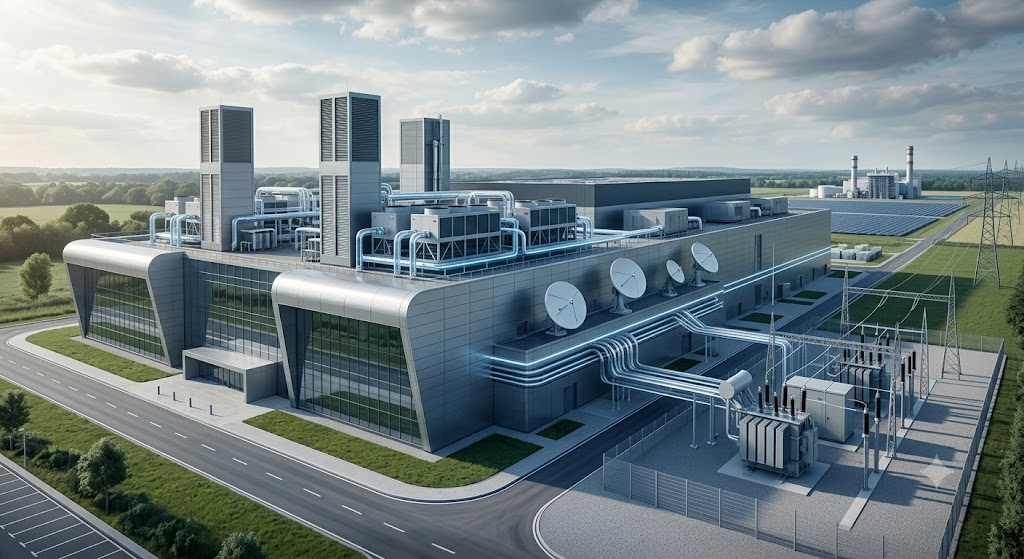
The artificial intelligence revolution is no longer just a software race; it has evolved into an unprecedented hardware and infrastructure war. While NVIDIA (NASDAQ: NVDA) remains the poster child of this era by providing the crucial GPU brainpower, the immense physical strain these chips place on data centers has created a massive bottleneck.
As hyperscalers—such as Microsoft, Alphabet, Meta, and Amazon—aggressively expand their capital expenditure (CAPEX) to scale next-generation AI workloads, the investment narrative is rapidly shifting. To unlock the full potential of AI clusters, the world needs more than just chips. It requires a robust, scalable, and highly efficient underlying infrastructure layer.
For savvy investors looking for a more defensible moat and less valuation froth than mega-cap chipmakers, here are three hidden sectors—and the pivotal stocks within them—that are quietly powering the AI infrastructure boom.
1. Liquid Cooling: Solving the Thermal Chokepoint
The transition from air cooling to liquid cooling is no longer optional; it is a thermal necessity. NVIDIA’s latest architecture architectures pump out unprecedented thermal design power (TDP), pushing traditional legacy data center cooling systems past their physical limits. Without advanced thermal management, advanced GPUs face severe performance throttling.
This has created an immense secular growth tailwind for liquid cooling specialists, most notably Vertiv Holdings Co (NYSE: VRT).
Vertiv possesses a massive, proprietary tech advantage in offering end-to-end digital infrastructure and thermal management. The company is experiencing robust margin expansion as tech giants scramble to secure high-density cooling solutions for their newly built AI data clusters. With strong order visibility stretching multiple quarters into the future, Vertiv represents a pure-play infrastructure winner acting as the vital “radiator” to the AI ecosystem.
2. Optical Transceivers: Eliminating the Networking Bottleneck
Building a massive AI model requires tens of thousands of GPUs to talk to one another simultaneously. If data transfer speeds lag, a networking chokepoint occurs, rendering the multi-billion-dollar computing cluster inefficient. This is where optical interconnect technology becomes critical.
To handle massive AI workloads, the industry is aggressively upgrading from 400G and 800G optical transceivers to cutting-edge 1.6T optical modules. These components act as the high-speed “capillaries” that transfer data at the speed of light within data centers.
Companies positioned deeply within the semiconductor supply chain—particularly those providing advanced optical components or specialized testing equipment—are capturing outsized pricing power. As hardware bottlenecks shift from compute to connectivity, specialized networking and optics vendors are poised for substantial revenue acceleration.
3. Power Grid Infrastructure: The Ultimate Constraint
The inconvenient truth of artificial intelligence is that it is incredibly power-hungry. A single generative AI query can consume up to ten times more electricity than a traditional Google search. Hyperscalers are realizing that the ultimate limit to AI scaling isn’t chip availability—it is the capacity of the power grid.
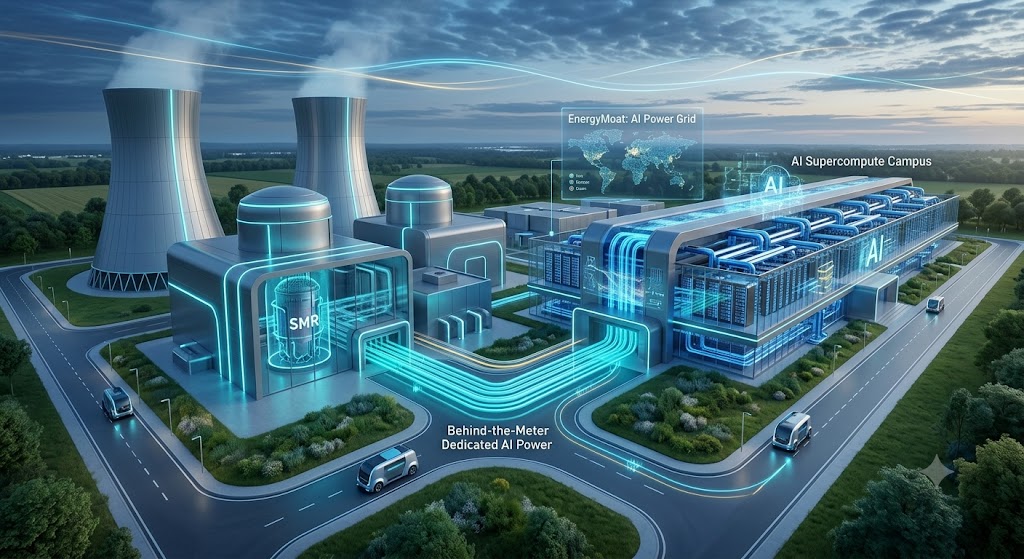
The power constraint issue has turned utility companies and grid infrastructure providers into unexpected AI beneficiaries. Tech giants are aggressively locking down clean energy contracts (nuclear, natural gas) near their data centers.
Furthermore, electrical component giants that manufacture high-voltage transformers, switchgears, and power distribution units—such as Eaton Corporation (NYSE: ETN)—are seeing an unprecedented surge in demand. The massive backlog in global grid upgrades ensures that infrastructure providers will enjoy stable, recurring cash flows long after the initial chip hype stabilizes.
The Bottom Line
The AI investment thesis is expanding. While GPUs grab the mainstream headlines, the real operational alpha is being generated in the unglamorous layers of the supply chain. By diversifying into liquid cooling, advanced optics, and energy infrastructure, investors can gain high-conviction exposure to the secular AI macro-cycle while insulating themselves from single-stock valuation volatility.
The picks and shovels of the AI gold rush are changing, and infrastructure is where the true compounding lies.
Disclaimer: The information provided in this article is for informational and educational purposes only and does not constitute financial, investment, or legal advice. Capital markets involve high risk, and past performance is not indicative of future results. Always conduct your own research before making investment decisions.

Leave a Reply