
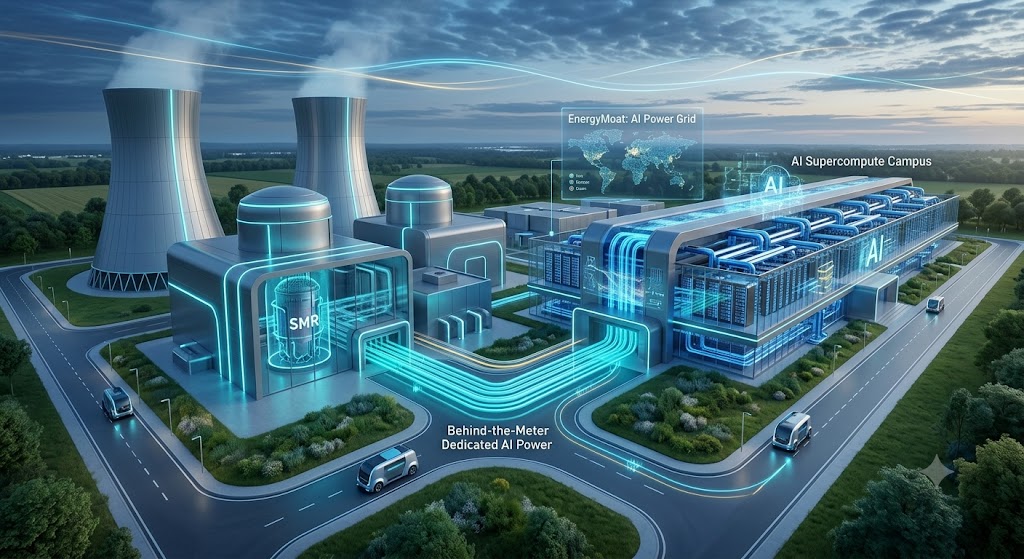
The global conversation surrounding artificial intelligence has long been dominated by chips, specialized hardware, and large language models. However, an immutable law of physics is shifting the battlefield: AI is profoundly power-hungry. As tens of thousands of next-generation GPUs cluster together in hyperscale data centers, tech conglomerates are running into a critical roadblock—the physical limits of the electrical grid.
To fuel this exponential growth while honoring aggressive corporate net-zero carbon mandates, tech giants are executing an unprecedented strategic pivot. They aren’t just buying green energy credits anymore; they are moving to secure whole nuclear power stations.
Here is why the nuclear renaissance is fundamentally tied to the future of artificial intelligence, and the stock vectors capitalizing on this structural transition.
1. The Baseload Problem: Why Renewables Fall Short
While solar and wind energy have experienced massive global adoption, they suffer from a fatal operational flaw for high-performance computing: intermittency. A generative AI cluster training a multi-trillion parameter model cannot pause because the wind stops blowing or the sun goes down. A temporary drop in voltage can disrupt training cycles, costing companies millions of dollars in lost compute time.
Hyperscalers require “firm baseload power”—electricity that is guaranteed to run at peak capacity 24 hours a day, 7 days a week, 365 days a year.
Nuclear energy stands alone as the only scalable, carbon-free source capable of hitting a near-93% capacity factor. It offers the exact high-density energy profile required to sustain gigawatt-scale data center campuses without relying on fossil fuels.
2. Going “Behind-the-Meter”: Bypassing Grid Approval Bottlenecks
The secondary crisis facing AI data center developers is the time-to-market. Connecting a newly built 500-megawatt data center to the traditional public utility grid in the United States or Europe can spark regulatory gridlock and infrastructure delays lasting up to five or seven years.
To bypass this hurdle, tech giants are pioneering “Behind-the-Meter” (BTM) power agreements.
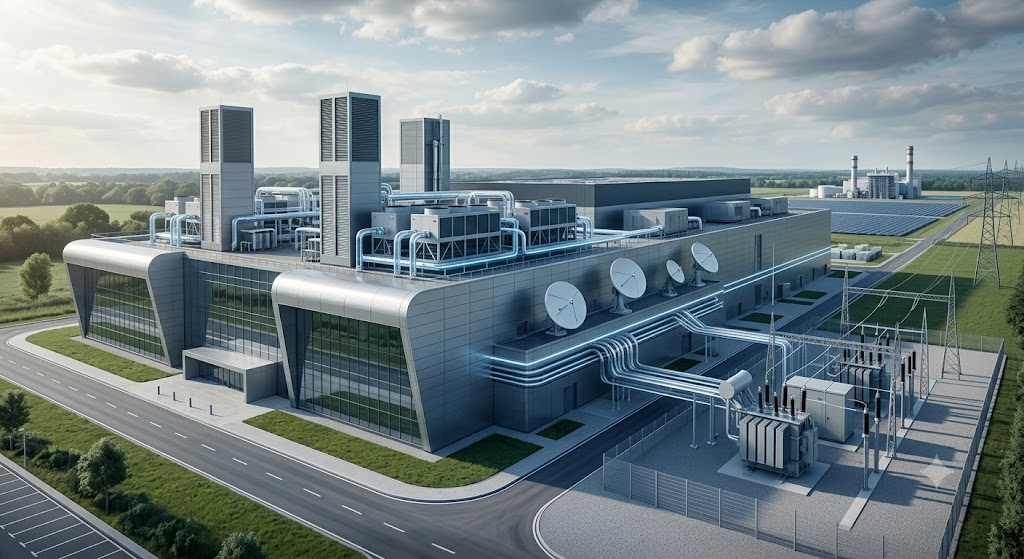
Under a BTM framework, a hyperscaler builds its massive data center campus directly adjacent to an operating nuclear facility, running dedicated transmission lines straight from the generator to the servers. This effectively cuts out the public utility middleman, avoiding years of grid interconnect queue delays. Amazon Web Services (AWS) set the industry benchmark by acquiring a 960MW data center campus directly connected to Talen Energy’s Susquehanna nuclear plant, signaling a massive structural shift in tech infrastructure procurement.
3. The Multi-Billion Dollar Nuclear Watchlist
As Wall Street wakes up to the reality that the ultimate constraint on AI is electricity, capital is flowing into specialized utilities and advanced reactor innovators:
- The Baseload Titans (e.g., Constellation Energy – NYSE: CEG & Vistra Corp – NYSE: VST): Constellation, the largest operator of commercial nuclear plants in the US, signed a historic 20-year agreement with Microsoft to revive a dormant reactor at Three Mile Island (rebranded as the Crane Clean Energy Center). These independent power producers (IPPs) possess uncontracted nuclear assets, granting them monumental pricing power in negotiations with desperate tech buyers.
- The SMR Innovators (e.g., Oklo Inc. – NYSE: OKLO): Backed by high-profile tech visionaries like Sam Altman, Small Modular Reactor (SMR) developers are designing next-generation, factory-built reactors. Google has already signed a framework agreement to purchase power from a fleet of SMRs developed by Kairos Power. While still in the regulatory and developmental phase, SMR equities represent a high-beta vehicle for capturing the long-term decentralization of the energy grid.
The Bottom Line
We are witnessing a historical convergence where the most sophisticated digital technology on earth is forced to rely on the highest-density physical energy source ever discovered. The AI infrastructure trade is no longer just about buying the hardware that calculates data; it is about owning the infrastructure that keeps the lights on.
As hyperscalers aggressively look to secure stable kilovolts, power generation assets are transitioning from defensive public utilities into premium growth drivers of the modern technology macro-cycle.
Disclaimer: The information provided in this article is for informational and educational purposes only and does not constitute financial, investment, or legal advice. Nuclear energy equities and high-beta infrastructure stocks involve significant regulatory and market risks. Always conduct your own research before making investment decisions.

Leave a Reply