
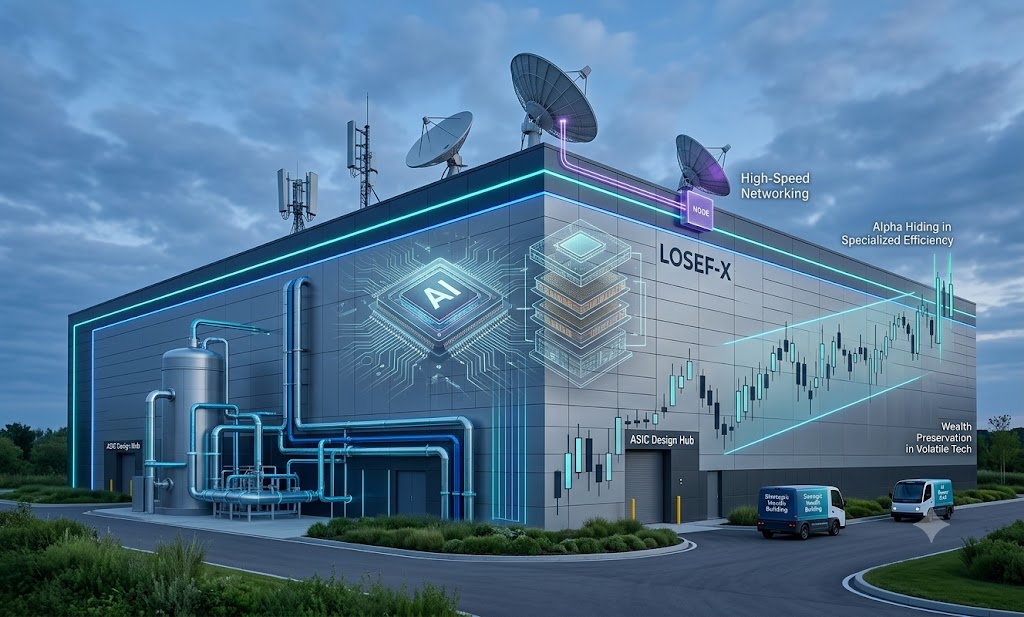
For the past few years, the semiconductor narrative has been monolithically focused on NVIDIA and its general-purpose GPUs (like the H100 and Blackwell). However, as artificial intelligence transitions from the “experimental training phase” to the “mass deployment and inference phase,” the economics of AI computing are fundamentally changing. High costs, power constraints, and specific corporate workloads are forcing big tech companies to look beyond standard GPUs.
This microeconomic shift is fueling a massive, multi-year secular tailwind for two specific semiconductor sub-sectors: Custom ASICs (Application-Specific Integrated Circuits) and Edge AI Processors.
For investors looking for high-conviction, small-to-mid-cap opportunities with deep structural moats, here is why custom silicon is the next frontier in the tech cycle.
1. The Rise of Custom ASICs: Bypassing the “NVIDIA Tax”
While general-purpose GPUs are brilliant at training massive, unpredictable large language models (LLMs), they are incredibly expensive, power-hungry, and often packed with computing features that enterprise clients don’t actually need for daily operations.
To expand profit margins and optimize infrastructure, hyperscalers (Google, Meta, Amazon, and Microsoft) are aggressively developing their own proprietary in-house AI chips (such as Google’s TPU and Amazon’s Trainium). Because these tech giants do not manufacture silicon themselves, they rely entirely on specialized Custom ASIC design partners to turn their architecture concepts into physical blueprints.
- The Investment Angle: Custom ASIC design firms hold immense pricing power. They enjoy long-term contract visibility and sticky revenue models because once a tech giant integrates a specific custom chip into its server architecture, switching design partners is prohibitively expensive. As hyperscalers look to lower their reliance on NVIDIA, capital expenditure is rotating directly into custom silicon enablers.
2. Edge AI: Moving Intelligence from Cloud to Hardware
Thus far, 95% of AI computation has occurred inside massive, centralized data centers. However, sending every single AI query—whether it’s a smartphone camera adjustment, an autonomous driving decision, or a localized robotics command—back to a centralized cloud server introduces severe latency (lag) and data privacy issues.
The solution is Edge AI—processing artificial intelligence directly on local hardware, without an internet connection.
The hardware bottleneck for Edge AI is entirely different from cloud data centers. Edge chips must be incredibly small, cheap, and run on ultra-low wattage (often less than 5 watts, compared to a data center GPU which devours 700+ watts). Small-cap semiconductor disrupters specializing in ultra-low-power neural processing units (NPUs) are quietly winning massive design contracts for next-generation smart devices, industrial robotics, and automotive perception systems.
3. Supply Chain Chokepoints: Advanced Packaging
Whether a chip is an advanced GPU or a specialized ASIC, it cannot function without Advanced Packaging (specifically TSMC’s CoWoS technology). The industry has reached a point where physical transistors can no longer be shrunk easily; instead, engineers are stacking multiple smaller chips (chiplets) tightly together on a single substrate to boost performance.
Because advanced packaging capacity is a global bottleneck, downstream companies that provide specialized testing equipment, thermal interface materials, or substrate routing technologies are experiencing explosive revenue acceleration. These mid-cap hardware enablers represent a highly defensive “picks and shovels” play on the broader semiconductor ecosystem.
The Bottom Line
The semiconductor macro-cycle is diversifying. The initial phase of the AI boom rewarded the general-purpose computing monopolies, but the maturity of the market belongs to customization and efficiency.
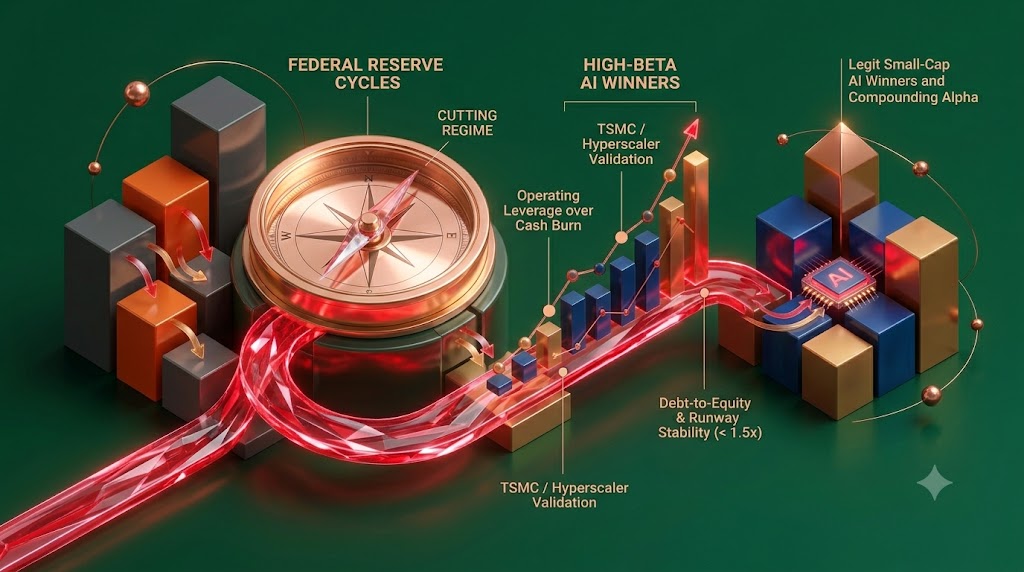
By looking beyond mega-cap chipmakers and positioning capital into custom ASIC design houses and low-power Edge AI innovators, investors can capture the high-beta expansion of the hardware lifecycle. The future of AI isn’t just about raw horsepower; it’s about specialized efficiency, and that is where the true compounding alpha is hiding.
Disclaimer: The information provided in this article is for informational and educational purposes only and does not constitute financial, investment, or legal advice. Semiconductor equities, particularly small-to-mid-cap tech stocks, carry elevated volatility and market risks. Always conduct your own research before making investment decisions.

Leave a Reply