
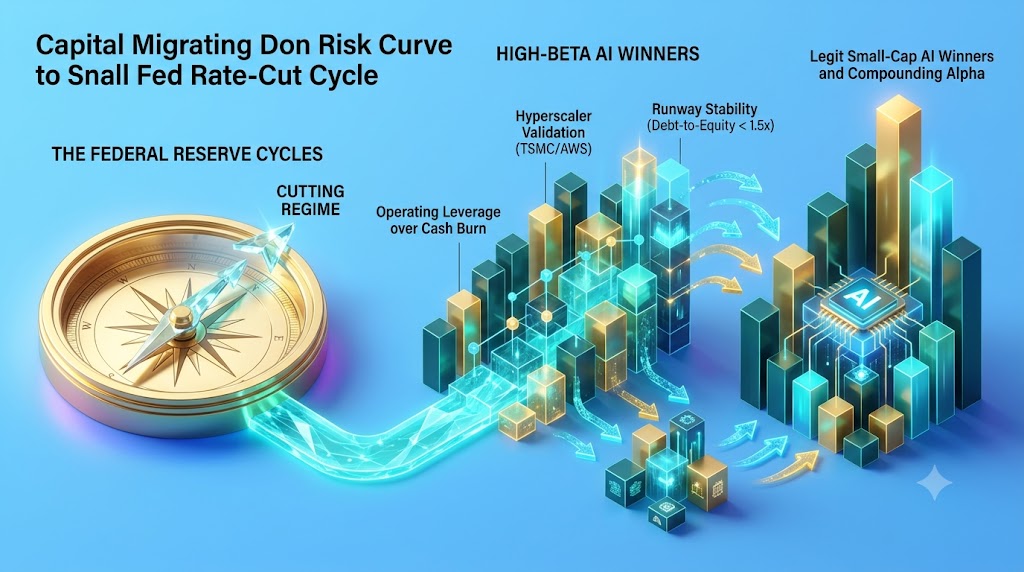
The macroeconomic landscape is undergoes a fundamental regime shift. As the Federal Reserve moves forward with its rate-cutting cycle, the mechanics of market liquidity are rotating away from the heavily crowded mega-cap “Magnificent Seven” and flowing down the risk curve.
For growth investors, this macro pivot represents the ultimate catalyst for small-cap technology and high-beta AI equities.
However, unlike the broad-based speculative bubble of 2021, the current liquidity cycle is highly discerning. Navigating small-cap AI requires an institutional screening framework to separate the structural compounders from the unprofitable concept stocks. Here is how the macro cycle catalyzes small-cap tech, and the metric-driven playbook to screen for legitimate winners.
1. The Macro Mechanism: Why Rate Cuts Unshackle Small-Caps
To understand why small-caps underperformed during the hiking cycle, one must look at the corporate balance sheet. Mega-cap tech giants like Microsoft or Apple sit on massive mountains of cash, allowing them to remain completely immune to high borrowing costs. In contrast, small-cap companies heavily rely on external financing, floating-rate debt, and revolving credit facilities to fund their research and development (R&D).
When the Fed slashes interest rates, two powerful forces are unlocked:
- Immediate Cost Relief: Interest expenses instantly drop for companies carrying variable short-term debt, expanding net margins without needing a single dollar of organic revenue growth.
- Valuation Multiple Expansion: Growth stocks derive most of their intrinsic value from future projected cash flows. Lower discount rates mathematically inflate the present value of those future earnings, leading to aggressive multiple expansion for high-beta assets.
2. The Institutional Screen: Separating Hype from Reality
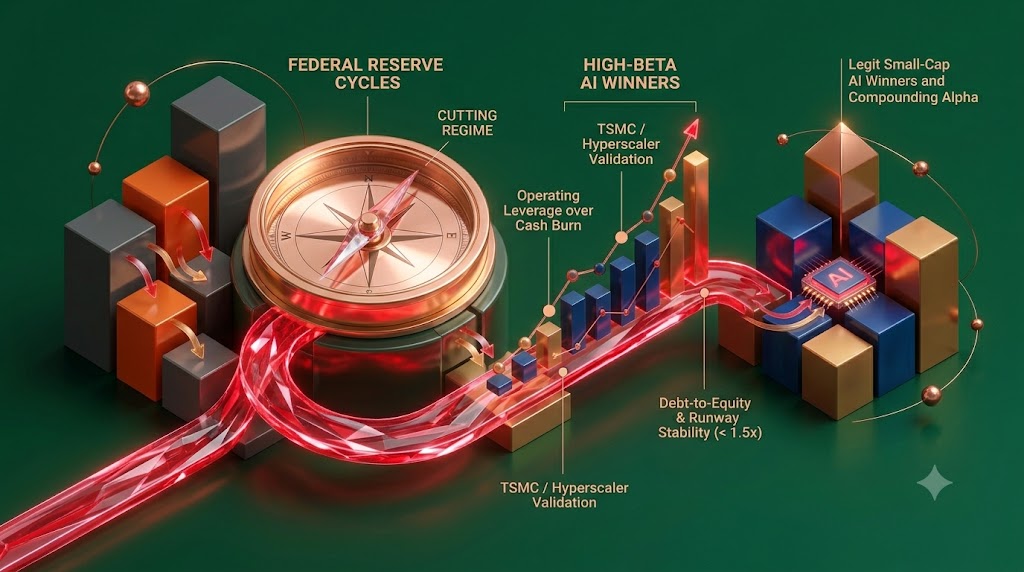
In the small-cap AI universe, every micro-cap software company claims to have a proprietary LLM integration. To avoid permanent capital loss, institutional investors deploy a strict three-pronged quantitative filter:
Metric A: Operating Leverage over Cash Burn
Look for small-caps where revenue growth is outpacing operating expenses. If a company is doubling its sales but its marketing and administrative spend is tripling just to keep up, it is a speculative cash-burner. True compounders exhibit operating leverage—their software or infrastructure can scale globally without requiring an exponential increase in head count or overhead.
Metric B: The TSMC / Hyperscaler Validation
Does the small-cap have verified upstream or downstream relationships with the absolute gatekeepers of AI? If a mid-to-small cap hardware or custom software firm has secured direct allocation from TSMC, design wins with Broadcom, or multi-year enterprise contracts with AWS and Microsoft Azure, the tech has been thoroughly vetted by multi-billion-dollar engineering teams. Trust enterprise validation over retail press releases.
Metric C: Debt-to-Equity and Runway Stability
Filter out any small-cap tech stock with a Debt-to-Equity ratio higher than 1.5x unless they have at least 24 months of unencumbered cash runway. The initial phase of a rate-cut cycle can still be choppy; you want companies that are capitalizing on growth out of strength, not companies desperately running to the capital markets for highly dilutive secondary equity offerings just to keep the lights on.
The Bottom Line
The macro tide is turning, and the historical valuation gap between mega-caps and small-caps is starting to compress. Capital is actively seeking explosive growth vehicles, making high-beta small-cap tech the primary beneficiary of the next liquidity expansion.
But remember: the market is no longer handed out participation trophies. Do not buy the generic “AI narrative.” Deploy a strict institutional filter, focus on companies with genuine operating leverage, and let the Fed’s monetary easing do the heavy lifting for your portfolio’s compounding alpha.
Disclaimer: The information provided in this article is for informational and educational purposes only and does not constitute financial, investment, or legal advice. Small-cap and micro-cap equities carry extraordinary risks, high volatility, and potential for illiquidity. Always conduct your own research before deploying risk capital.









Leave a Reply